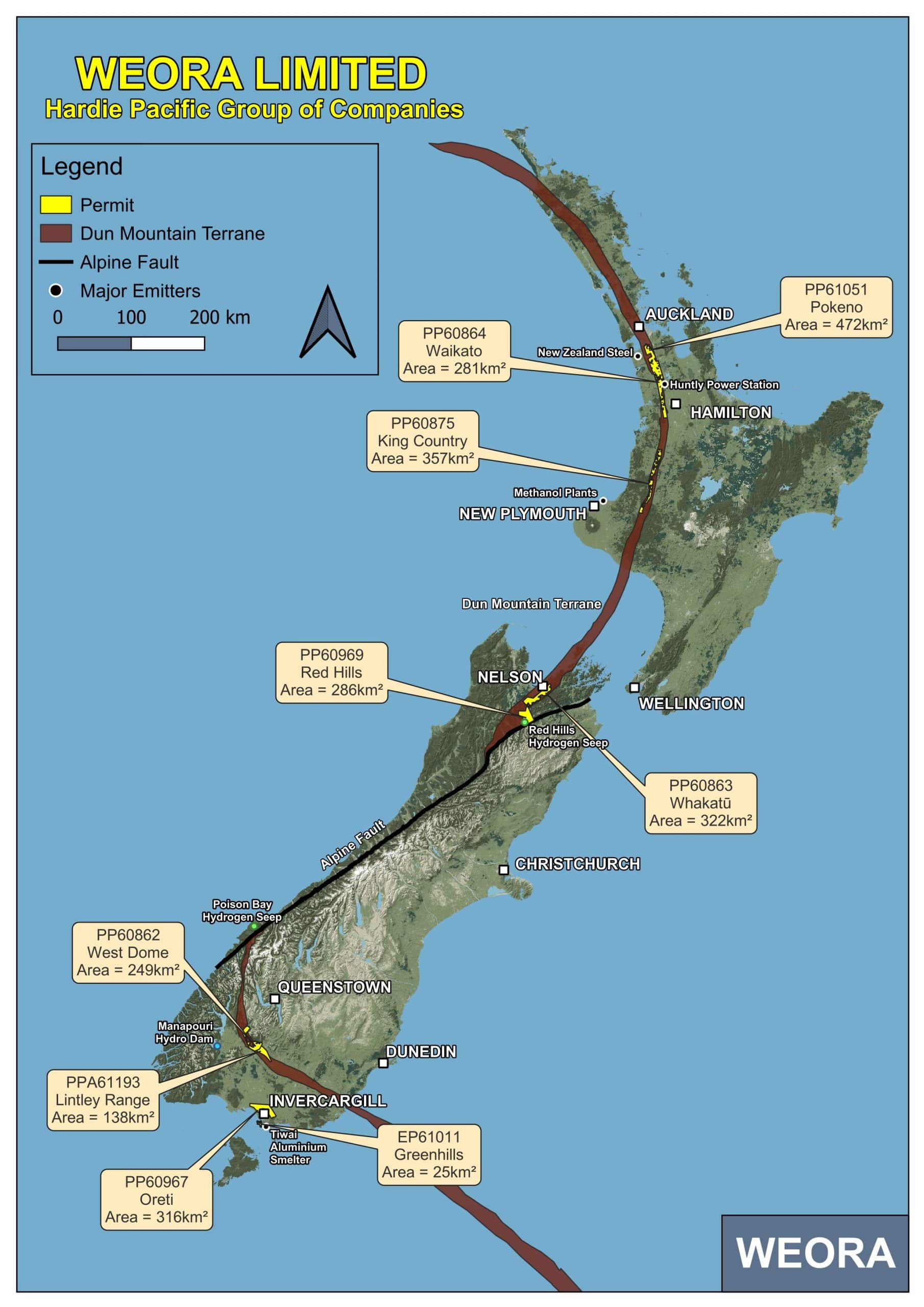
Natural hydrogen is generated within the Earth through geological processes and is increasingly recognised as a zero‑carbon energy source with vast potential. It offers a pathway to power industry, mobility, and storage—without the carbon footprint of conventional fuels.
Why it matters
Hydrogen is central to the next era of energy: it can fuel heavy transport, decarbonise industrial heat, and balance power systems through storage. By exploring natural hydrogen, Weora aims to unlock direct, geological sources that could complement electrolytic and other production methods, broadening the energy mix while reducing system costs over time.
How it works
Ultramafic rocks have a unique ability to produce natural hydrogen (H₂) when they undergo metamorphism in the presence of water—a process known as serpentinisation. While natural hydrogen exploration is still in its early stages globally, seeps have been documented in several locations, including New Zealand. In fact, natural hydrogen seeps have been recorded at Poison Bay and Red Hills, and hydrogen was encountered during drilling at Weora’s Greenhills permit area.
Unlike traditional methane deposits, hydrogen is unlikely to be found in pressurised stagnant reservoirs. Instead, it typically occurs as slow-flowing accumulations, continuously generated as ultramafic rocks serpentinise. This hydrogen moves through natural fractures within the rock mass, creating a dynamic and ongoing source.
At Weora, we are actively investigating the economic potential of natural hydrogen across our licence portfolio. Our research also explores whether engineered systems for in situ carbon mineralisation could enable commercial hydrogen production—unlocking a sustainable energy resource for the future.
Natural Hydrogen
Geology & Advantage
Hydrogen is central to the next era of energy: it can fuel heavy transport, decarbonise industrial heat, and balance power systems through storage. By exploring natural hydrogen, Weora aims to unlock direct, geological sources that could complement electrolytic and other production methods, broadening the energy mix while reducing system costs over time.
Aotearoa’s ultramafic terrains are associated with serpentinisation, a process that can generate natural hydrogen. Weora’s programme focuses on evidence‑based exploration: geoscience, sensing, and testing to understand resource potential, flow characteristics, and viable development pathways.
Applications
Industry
Clean hydrogen for process heat and feedstock substitution.
Transport
Heavy mobility and fleet solutions where energy density and rapid refuelling count.
Power & Storage
Grid support, balancing renewables, and long‑duration storage opportunities.
A Title to Turn the Visitor Into a Lead
This is your chance to emphasize why the visitor should contact you right now.
![Weora [dev site]](https://dev.weora.com/wp-content/uploads/2026/01/cropped-Weora-Logo-light.jpg)